Staging illusions: exploring the mechanics of digital bluffing.
Themes → Emerging Realities
By staging fake exhibitions and orchestrating controlled social media interventions, the project became a live testing ground for identity theft, data tracking, and the virality of misinformation.
It revealed a double-edged reality: networked identities are remarkably easy to manipulate, yet those manufactured illusions become incredibly fragile the moment they are subjected to scrutiny.
The dynamic ASP site: crawling the web for thematic data.
Dynamic Archive → Digital Hub
To ground these digital illusions, the project required a central repository. I built a custom, dynamic webpage that actively crawled the internet for thematic articles, acting as a live, continuously evolving archive.
This hub became the destination for every physical interaction, tracking the digital traces left behind when the physical world bridged into the digital.
Navel-Schau: the physical imprint of abstract identity.
Intimate Object → Conceptual Probe
At the center of this interplay were plaster casts of human belly buttons—an ironic, physical twist on Navel-Schau (navel-gazing). They were not fetish objects, but conceptual probes. Holding a physical cast makes the abstract concept of identity tangible.
Accompanied by their QR codes, they posed the core question: How much credibility does a touchable imprint lend to a fleeting online claim?
The book: bridging tactile pages to live web environments.
Printed Node → Live Conversation
To tie the entire ecosystem together, I created a modest, portable book gathering photographs, short texts, and QR codes. It functioned as a physical anchor within the larger digital network.
Readers who scanned the codes moved seamlessly from the tactile to the temporal—transforming a static, printed page into a live conversation between the real and the virtual.
The evolution: applying 2009's digital findings to today's geometric forms.
2009 Experiment → Today's Sculptures
Navel.me was my foundational exploration into "phygital" strategies—the meeting point of object and network. Today, that early fascination is the lifeblood of my sculptural work.
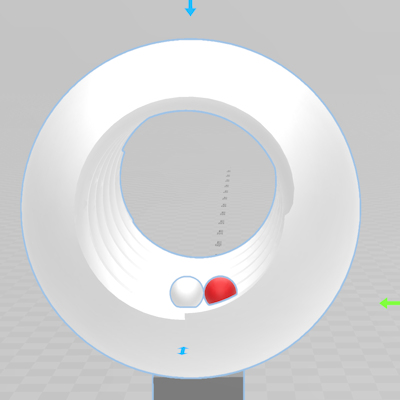
The raw experimentation of those plaster belly buttons evolved into the geometric clarity and interactivity of my current 3D-printed art, proving that the true magic happens in the live conversation between virtual design and physical reality.
Comprehensive Article
Staging Illusions and Manufacturing Trust
To understand how narratives take root online, I staged posters for exhibitions that never existed and orchestrated controlled social media interventions. The project became a live testing ground for identity theft, data tracking, and the virality of misinformation. What surprised me most was the double-edged reality of this new ecosystem: networked systems made identity remarkably easy to manipulate, yet those manufactured illusions became incredibly fragile the moment they were subjected to scrutiny. It was a raw demonstration of how trust is manufactured in a digital space.
The Dynamic Archive and the Digital Hub
To ground these digital illusions, the project required a central repository. I built a custom, dynamic ASP webpage that actively crawled the internet, collecting real-world articles centered around the project's core themes. This site served as a live, continuously evolving archive. It became the destination for every physical interaction within the project, tracking the digital traces left behind whenever a viewer bridged the gap between the physical world and the digital hub.
Navel-Schau (The Belly Button Casts)
At the absolute center of this physical-digital interplay were plaster casts of human belly buttons. I used these small, intimate objects as an ironic twist on Navel-Schau (navel-gazing). They were never intended as fetish objects, but rather as conceptual probes. Holding a physical cast makes the abstract concept of identity tangible, yet paradoxically more fragile. Accompanied by QR codes linking straight back to the thematic data on the archive, the casts posed a fundamental question that anchored the entire project: How much credibility does a physical, touchable imprint lend to a fleeting online claim?
The Book as a Printed Node
To tie the entire ecosystem together, I created a modest, portable book that gathered photographs, short texts, and the QR codes. It functioned as a physical anchor within the larger digital network. Readers who scanned the codes moved seamlessly from the tactile to the temporal—transforming a static, printed page into a live conversation between the real and the virtual. Every scan left a measurable trace, proving that physical artifacts could lend an unearned credibility to the digital spaces they pointed toward.
Looking back, Navel.me was my foundational exploration into "phygital" strategies—the meeting point of object and network. It was a modest experiment, but its innovative, transformative nature laid the groundwork for my entire artistic trajectory.
Today, that early fascination with bridging the digital and physical worlds is the lifeblood of my sculptural work. The raw, conceptual experimentation of those plaster belly buttons has evolved into the geometric clarity and interactivity of my current 3D-printed art. Just as Navel.me explored the transition and manipulation of